
What Happens When Cinema Meets Visual Art?
- Arina Chuuriyyah Herawati
- Ailsa Luthfia Indrasari Laksana Putri
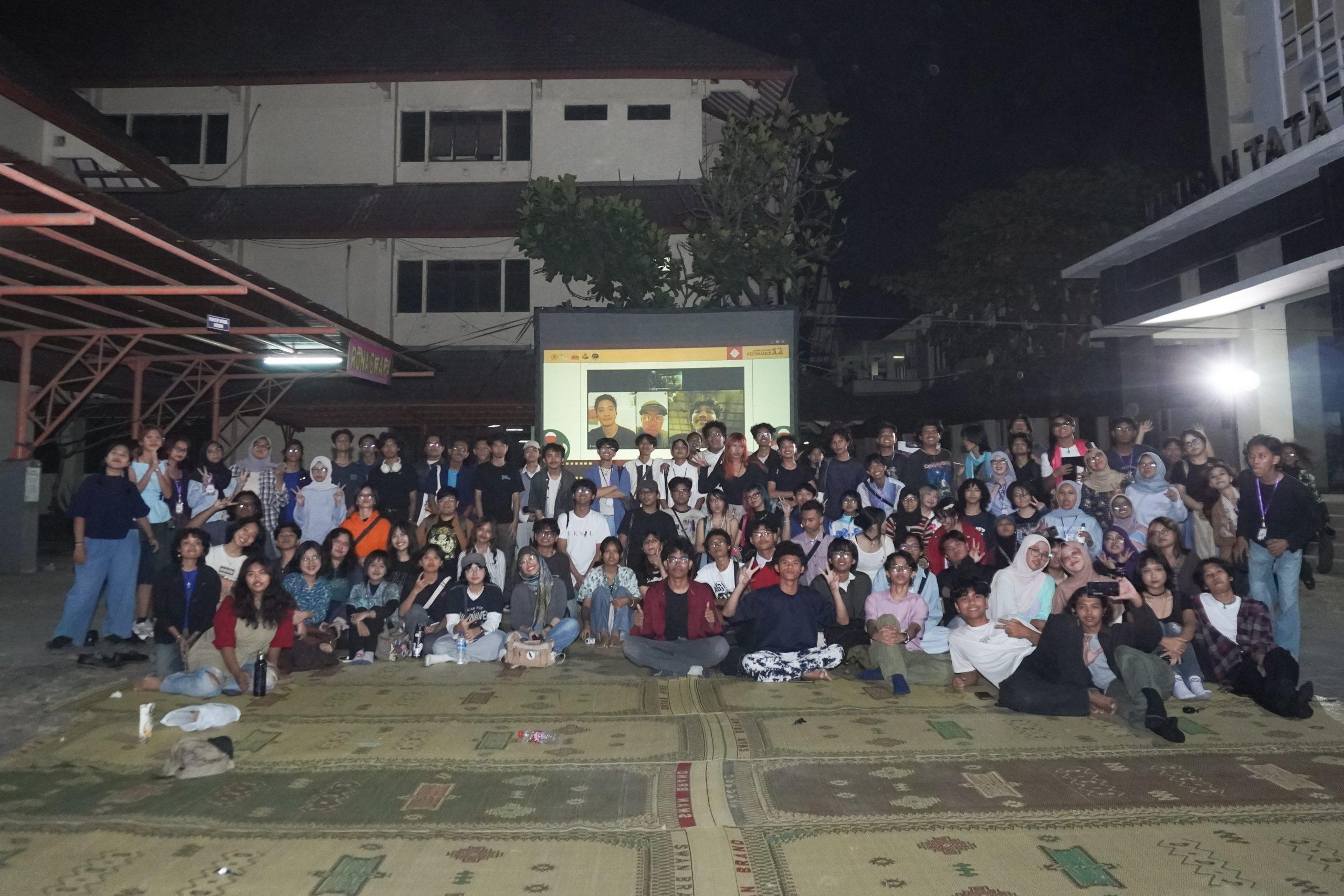
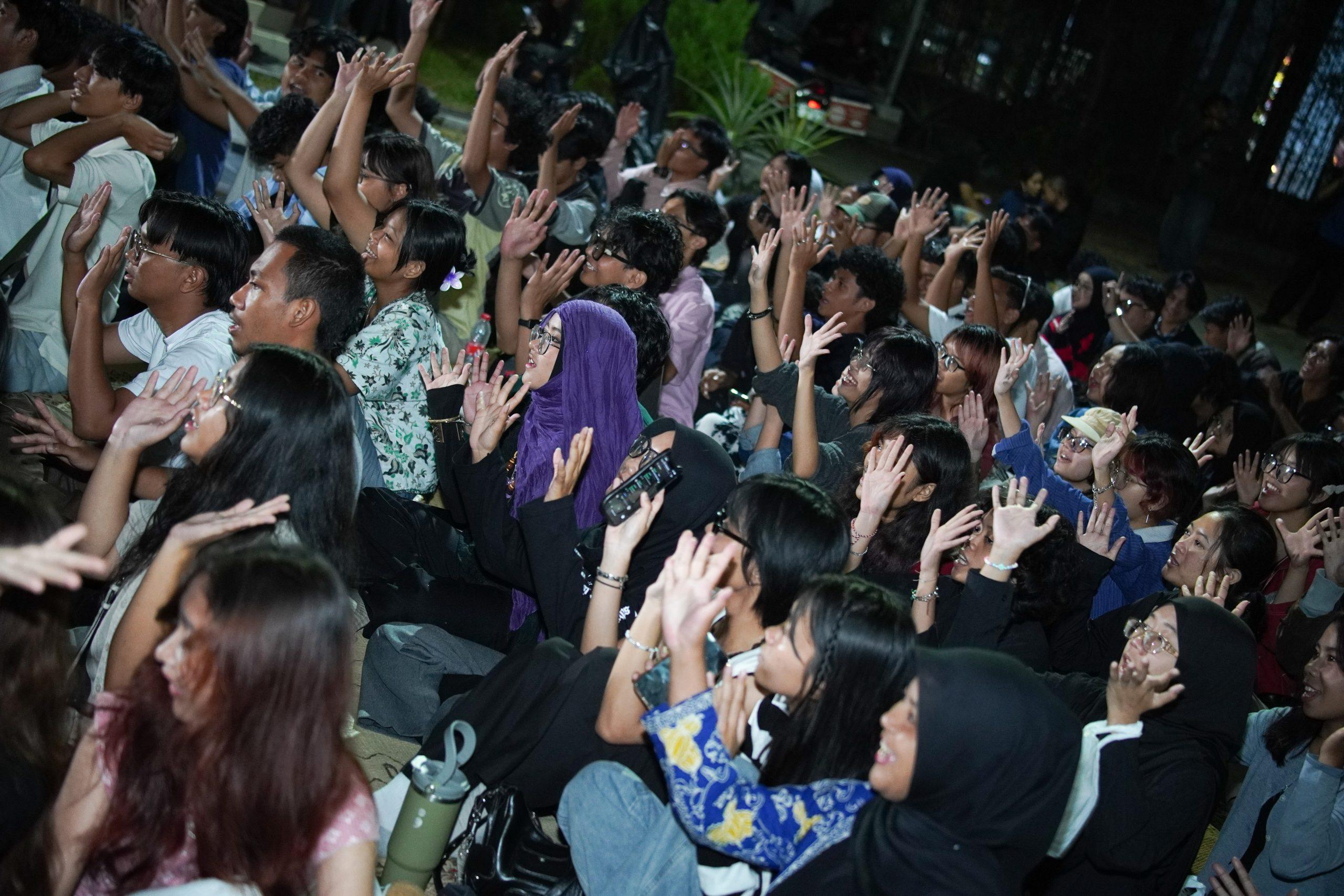
On August 26, 2026, mats were spread out in front of the Visual Art Management Department, where a crowd made up mostly of students from the Faculty of Visual Art gathered. As they waited for the films to begin, the lively atmosphere that night was further heightened by the MC’s endless stream of jokes. Cheers and enthusiastic applause accompanied the program director’s remarks and the reading of the program notes for Layar Seni Rupa, titled “Uncomfortable Green.”
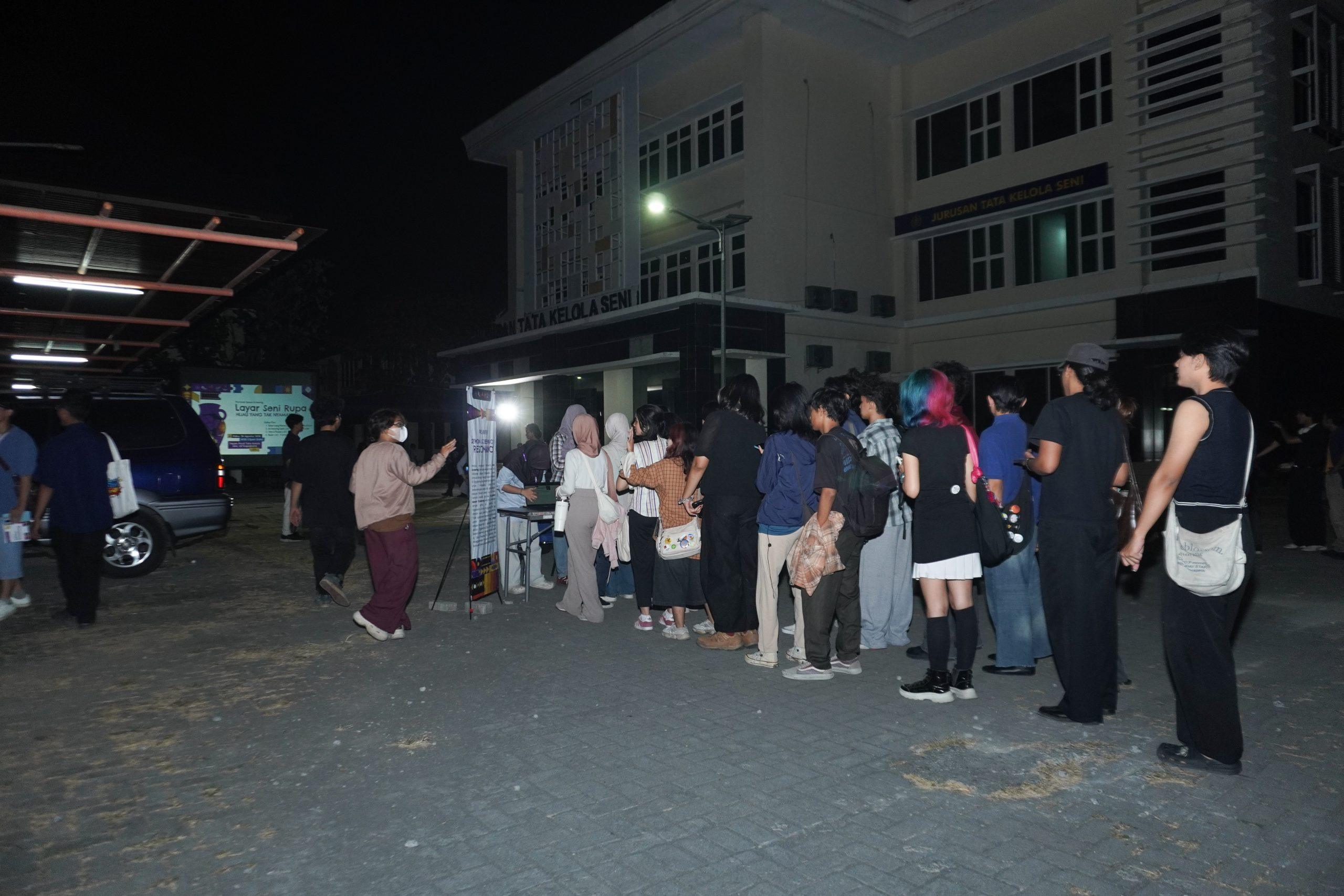
In line with its theme, Layar Seni Rupa screened four selected films that emerged from the intersection of film and visual art. Alvi, the programmer, explained that the selection was rooted in the idea of visual art as a medium through which personal feelings can be translated into works that do not always communicate in a straightforward or immediately accessible manner.
Alvi selected a series of films rich in visual metaphors, transforming the filmmakers’ personal anxieties into intuitive experiences for the audience. The four films screened—“Sweetness Satan,” “Air Kencing Sakti,” “I’m a Flower,” and “Nadir”—all embraced a departure from rigid narrative conventions. From the absurd dynamics between characters to their striking visual manifestations, the films functioned like canvases on which personal emotions could be explored freely.
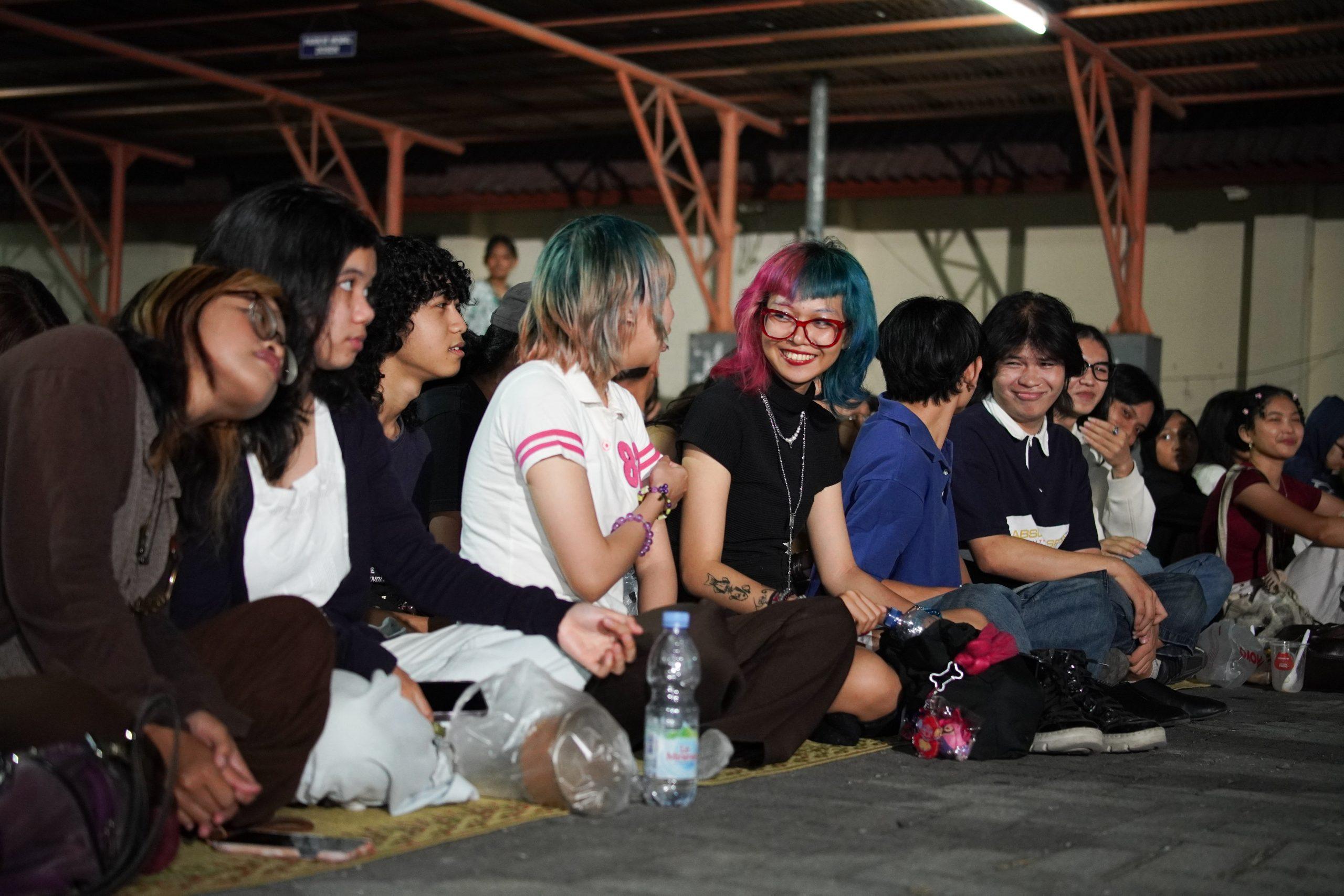
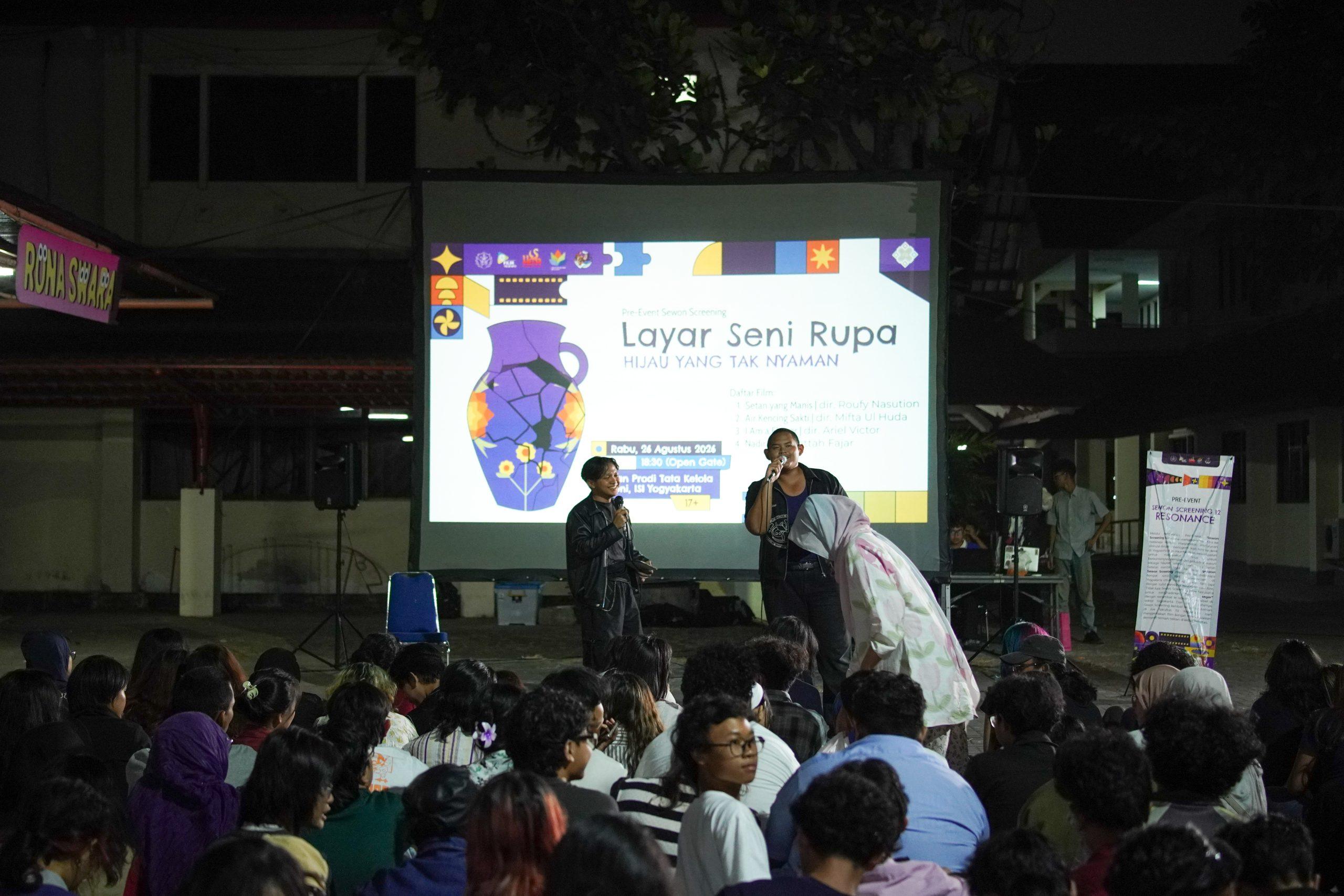
Take “Sweetness Satan,” for instance, which introduces Piyano, a character whose fingers are capable of playing the piano. This magical element, intertwined with the folk tale of celestial maidens bathing in a river, becomes a symbol of hope amid the grief of losing a partner. Meanwhile, the complexity of the parent-child relationship in “I’m a Flower” unfolds through vibrant, fluid 2D animation. The flower serves as a metaphor for a fragile yet ever-evolving search for identity, juxtaposing this intimate personal dynamic with the bustle of an outside world that continues to move at an increasingly rapid pace.
“Nadir” offers an equally captivating exploration of form. Through surreal sets and a two-dimensional house design, the film offers layers of visuals reminiscent of a dreamscape. Beneath this aesthetic choice lies a deeper message: ultimately, there is no place that can remain entirely hidden, for even at the doorstep of home, the secrets surrounding the identities of those closest to us may eventually be uncovered.
Interestingly, beyond their diverse formal experiments, all four films are united by one particularly striking visual element: green landscapes and the presence of plants. Alvi’s decision to incorporate these elements into the title “Uncomfortable Green” was therefore far from arbitrary. Here, the color green is deliberately detached from the festival’s broader theme, instead emerging organically from the imagery that unfolds on screen.
Green, a color commonly associated with tranquility and comfort, is instead deconstructed into a source of anxiety and alienation. In this program, natural elements are more than mere aesthetic stickers placed in the background of a story. They become manifestations of the discomfort lurking within our immediate surroundings. The glow of the screen that night seemed to pose a reflective question to the audience: are we gradually losing the sense of comfort that has long been sustained by the color green?
The films’ visual experiments and dense metaphors clearly resonated with the audience. Two fifth-semester Visual Communication Design students who attended that night, Kay and Nadia, admitted that they were drawn to the visual narratives presented on screen. While discussing “Air Kencing Sakti,” they fluidly interpreted the symbolism, reading its visual composition as an allegory of the earth, grass interacting with nature, and humanity’s dominance in its attempts to control the environment. Likewise, while watching “I’m a Flower,” the visual impression of the flower was understood not simply as an aesthetic representation of a plant, but as a metaphor for groups that are alienated and marginalized within society.
That night, the screening of Layar Seni Rupa ultimately demonstrated that when cinema intersects with visual art, the screen no longer exists to instruct or lecture its audience. Instead, film becomes an inclusive space for encounters and exchange. As Fattah Fajar, the director of “Nadir,” remarked during the discussion, “I’m happy when you have your own interpretation.” His words underscored that the outdoor, floor-seating screening at the Visual Art Management that evening was not merely a place to watch films, but an invitation to pause, absorb the forms before us, and dare to rethink.
Penerjemah Asi Dewiana Sandraputri

Komentar • 0
Tulis komentar kamu
Komentar • 0